
|
 |
Home ⇒ golf ⇒ justgolf ⇒ Current Article |  |
Article
Contents
Exercise for older golfersWeight training
| |||||||||||||||||||||||||||||||||||||||||||||||||||||||||||||||||||||||
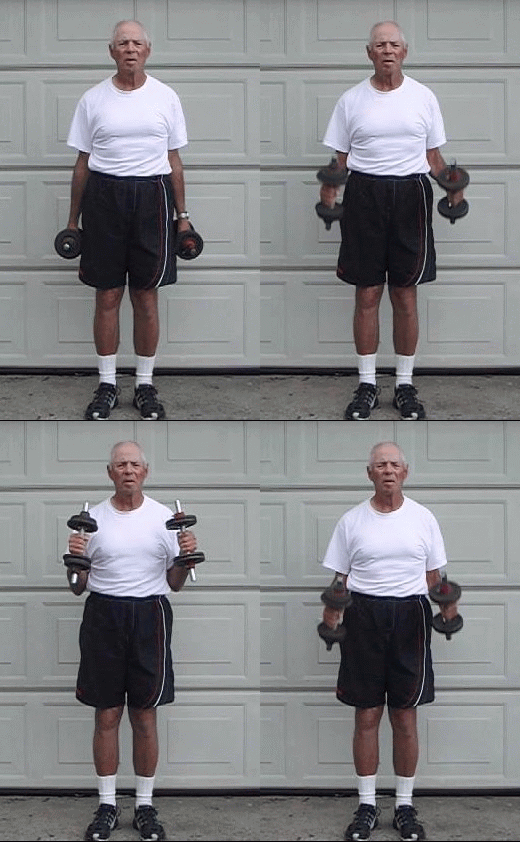
Standing dumbell curls. Simple, obvious, and completely standard. |
Kneeling on a weight bench, tuck your elbow at your side and lift the
dumbbell from the elbow. Don't swing it at the bottom; that will cheat
you of the exercise. Bring it to a stop where it would hang anyway;
that way, all the motion is created by your muscles, not swinging. |
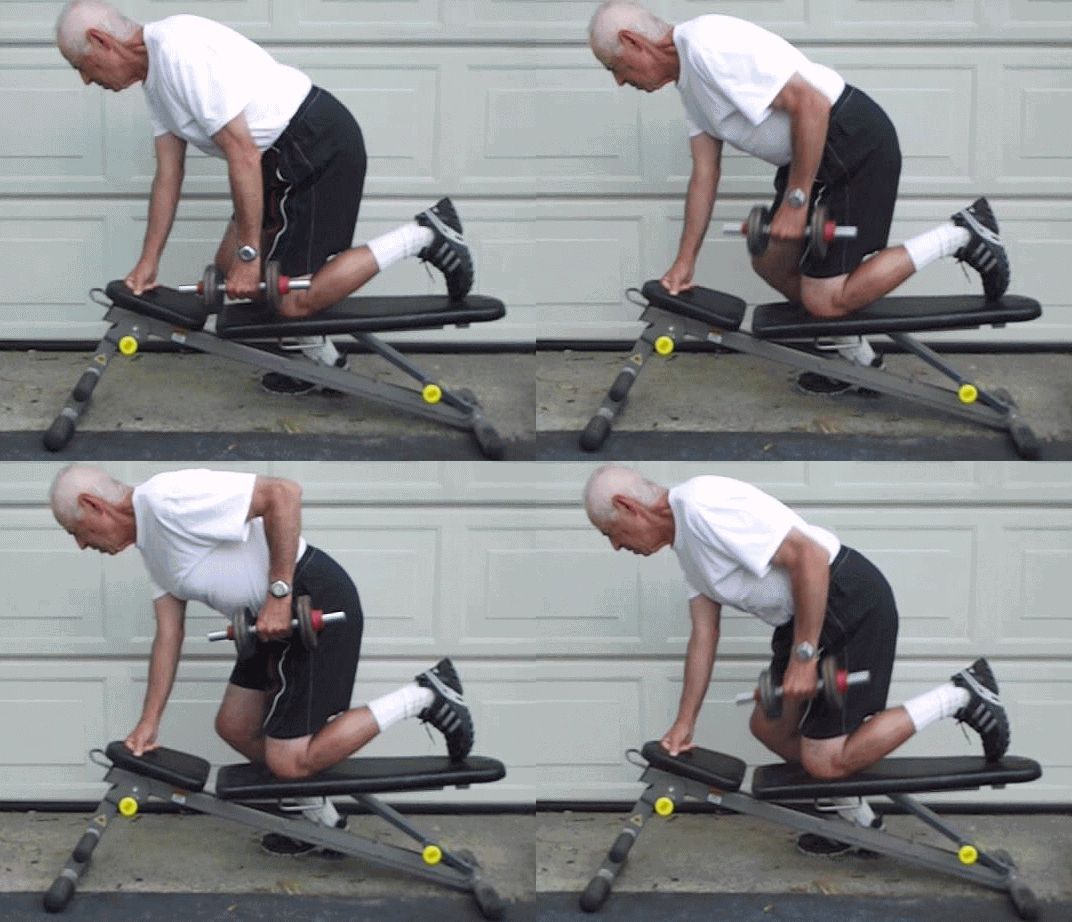
This time you'll raise the dumbbell using the muscle behind and below
your shoulder. The forearm should hang from the elbow with no effort
exerted; all
the effort is in the latissimus dorsi. |
Both Bob Forman and Meryl
Freeman suggested that the program needs upper back work to balance the
work on the pecs. I now use an upper
back exercise rather like the lat
exercise. Just turn the arm and dumbbell ninety degrees,
and lift out rather than back. |
The classic way to exercise the pectorals is the bench press. Flyes
with light dumbbells has several advantages for old guys like me: |
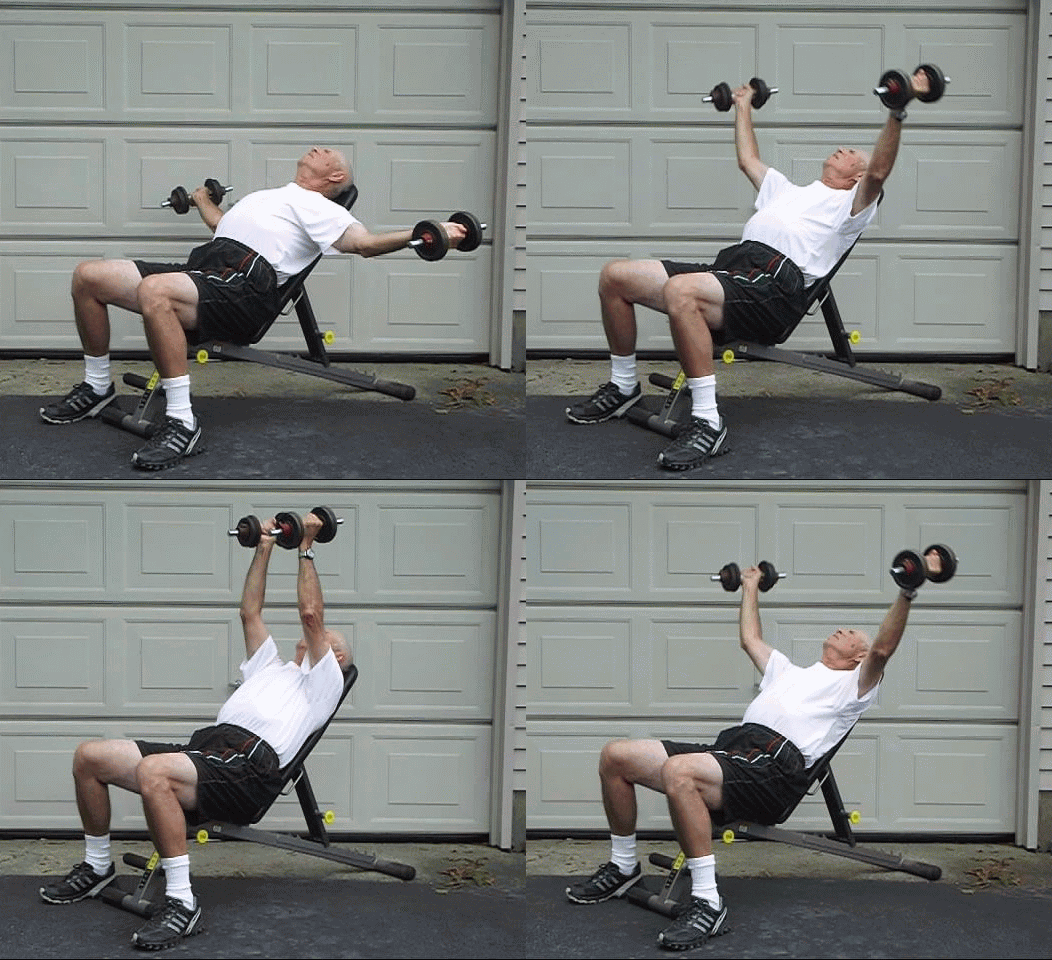
If your bench tilts, you can vary the tilt from day to day. More tilt
works higher on the pecs. |
The usual way to work the quadriceps and gluteus maximus is squats with extra weight on your
shoulders.
That is just asking for a bad back to act up. I came up with this
exercise via
my engineering training, not any special knowledge of biomechanics. |
The muscles on the back of the calf (gastrocnemius)
are exercised by calf lifts. A few advantages of the way I do it: |
Hamstrings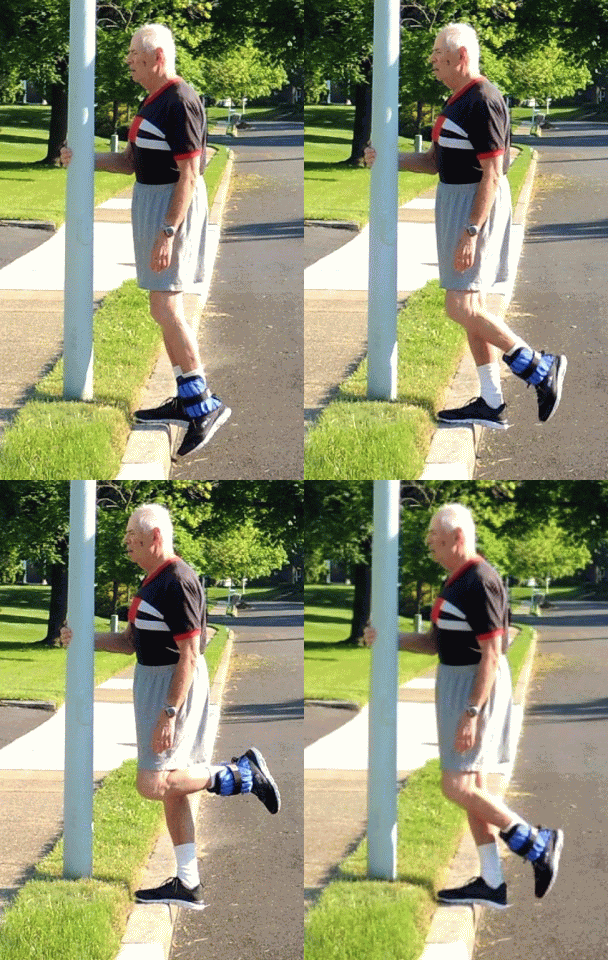 Notably missing from these
exercises is Hamstrings. Notably missing from these
exercises is Hamstrings.Update December 2015: In the Fall of 2014, I picked up a 10-pound ankle weight at a yard sale. Special equpment, I know, but not a hardship at the price I paid. I stand on one foot on the edge of a step (as for the calf lifts), and do "hamstring curls" with the other leg, which has the weight on the ankle. I also leave it on the ankle for the calf lifts; it adds 10 pounds to the weight the gastrocnemius is lifting. For this exercise, 5 pounds is probably not enough for someone who is even marginally fit. 10 pounds is about the minimum. Do each side separately. |
It's very standard to exercise the deltoids and trapezius with a
standing or sitting dumbbell press. No need to invent anything here. |
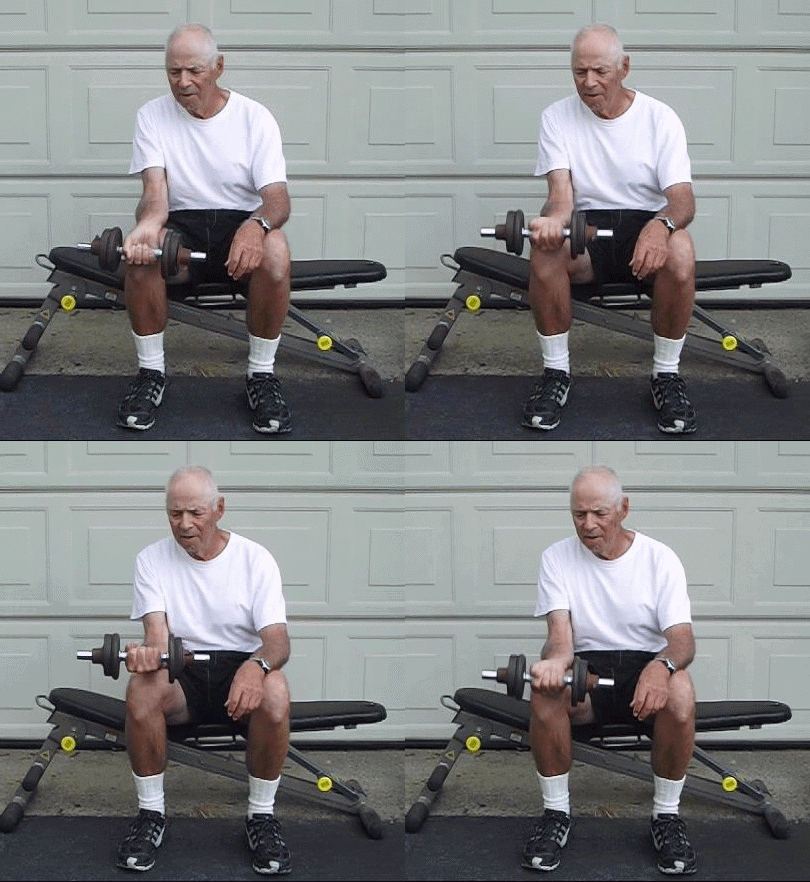
Lay the back of your forearm on your upper leg, and move the dumbbell
with just your wrist flexors. |
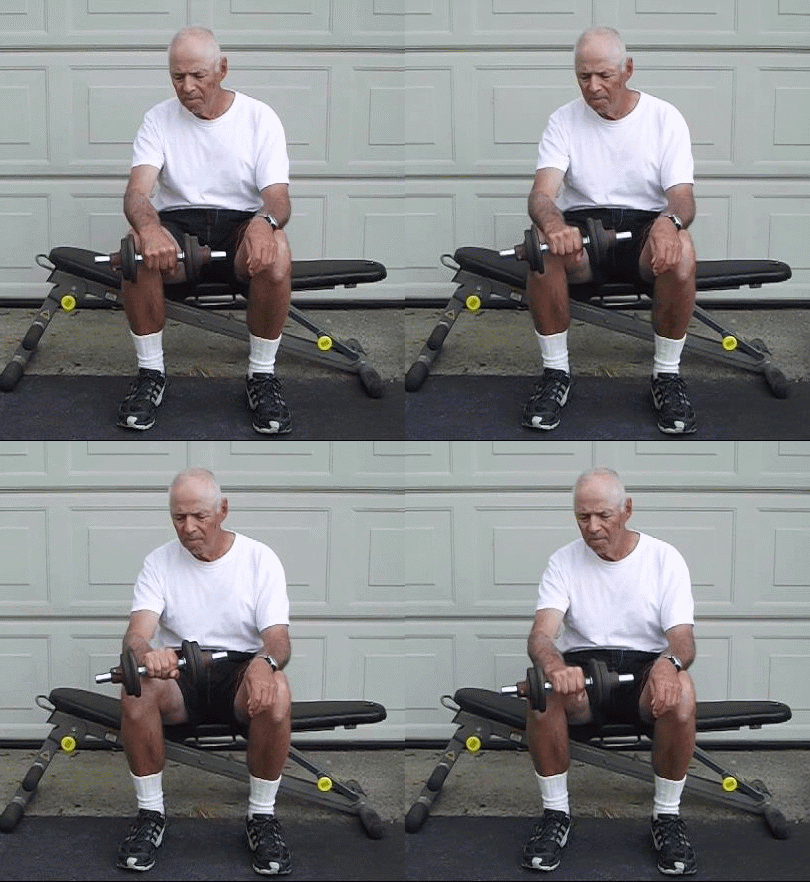
Forearm: Wrist ExtensorsLay the front of your forearm on your upper leg, and move the dumbbell with just your wrist extensors.Do each side separately. I see from the picture that I am probably moving my elbow and shoulder too much. I'll have to be more careful in the future. Actually, I have seen small breaks of form in several of the pictures. That is why many gyms have mirrored walls. It is not just for the narcissistic benefit of the body builders who train there. |
At the suggestion of Bob
Forman, I am now exercising with another dimension of wrist motion:
adduction and abduction. For the golfer, abduction is equivalent to
"wrist cock". I have found an abduction/adduction
exercise that
works for me. It is drawn from Bob's
video on the subject; my
exercise is the one using a golf club. |
Adduction is the flip side of abduction. This exercises the muscles
that oppose wrist cock. |
Abs and ObliquesThe abdominals and obliques (the muscles low on the side of the abdomen) are certainly important to exercise. They are also very important for back health. For this reason, I have grouped them with the back exercises. I do not do this just from logic; it is actually the way I do the exercises. I do my back exercises with more regularity than weight training, and I need to make sure the abs and obliques get done regularly. So they are listed with the back exercises.If you feel you don't need back exercises... You're wrong. No, no, no! I didn't mean to say that out loud -- even though it's probably true. But I meant to say, if you don't feel you need back exercises, you can do the abs and obliques exercises as part of your weight training routine. Unlike the rest of the exercises on this page, they are floor exercises and probably want a mat or a carpeted floor. (Not a concrete basement floor, which is another reason I do them as part of my back routine instead of my weight training.) |
 Biceps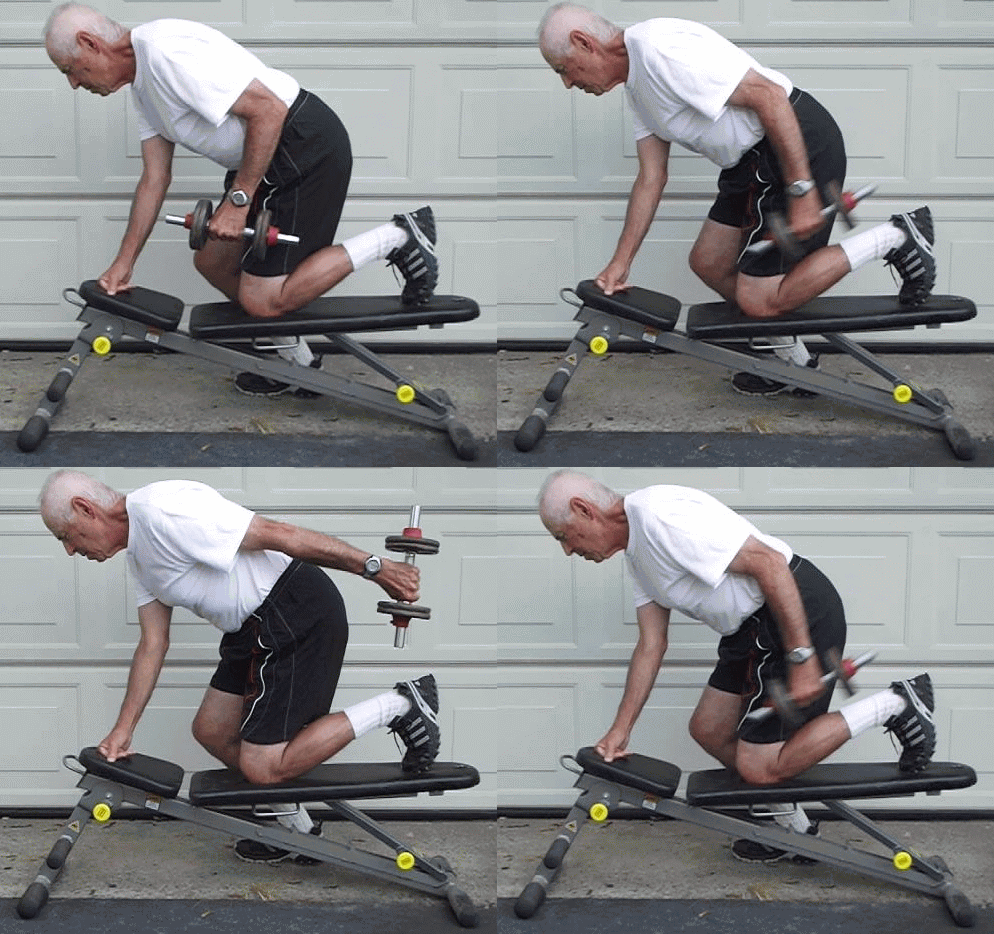
 Lats
Lats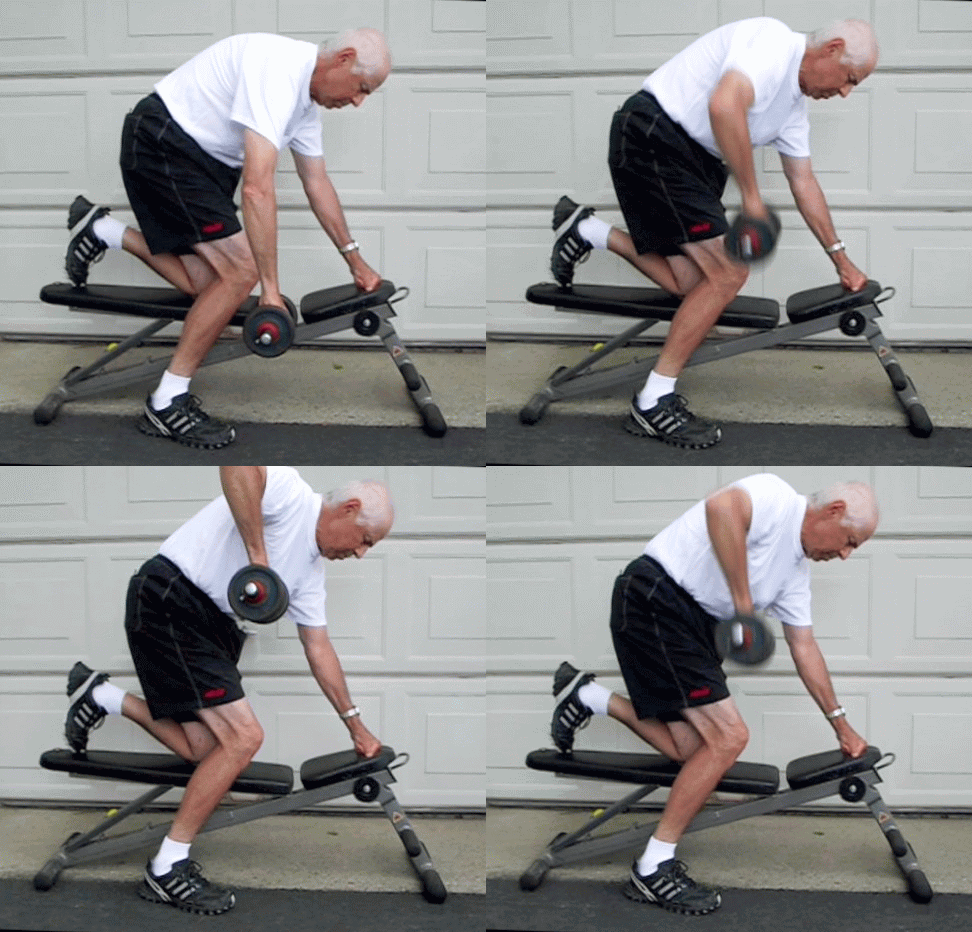 Upper
Back
Upper
Back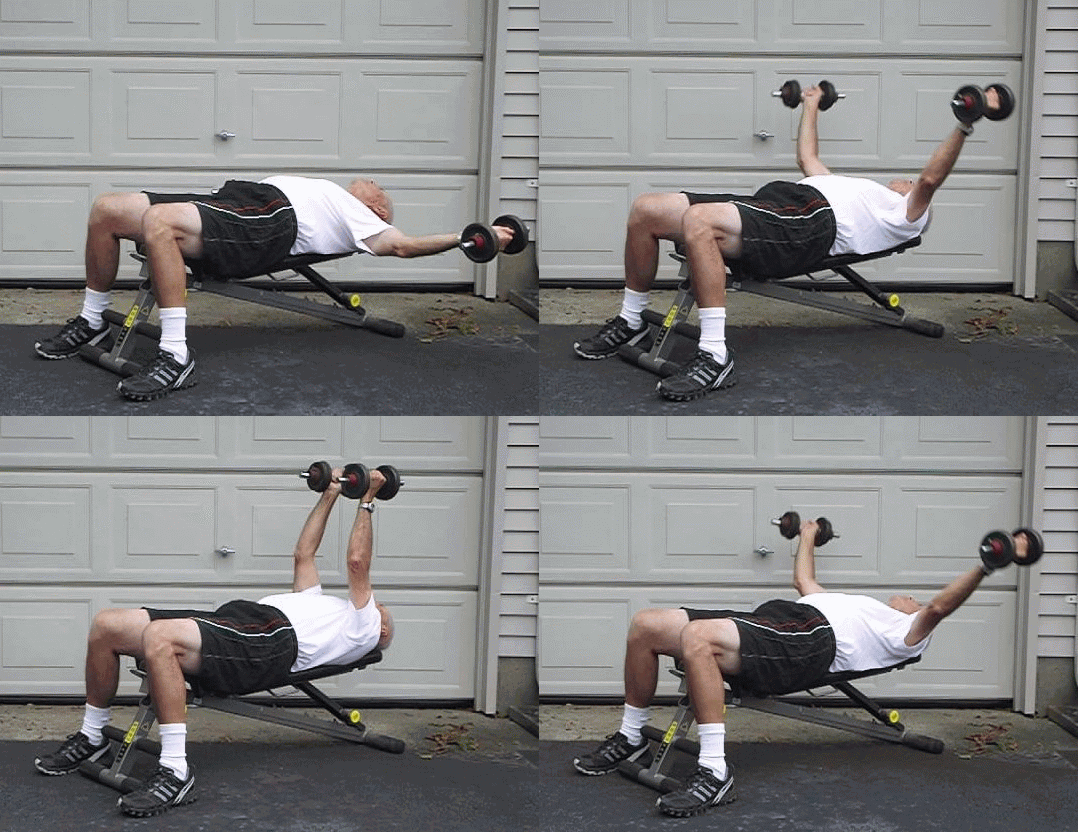
 Upper
Pecs
Upper
Pecs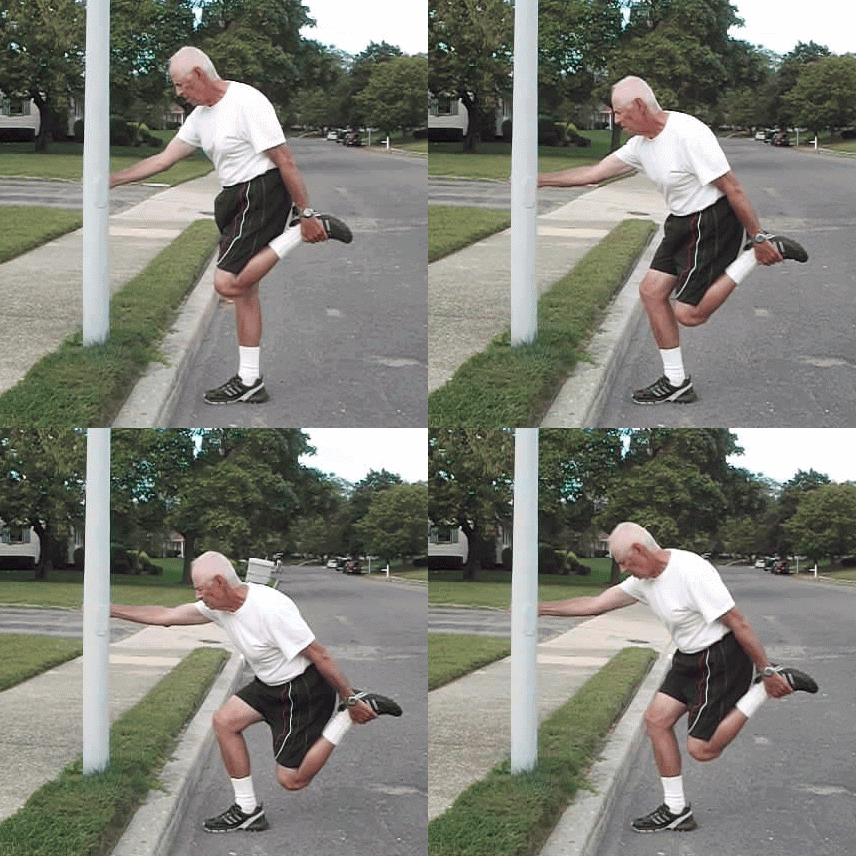 Quads
and Glutes
Quads
and Glutes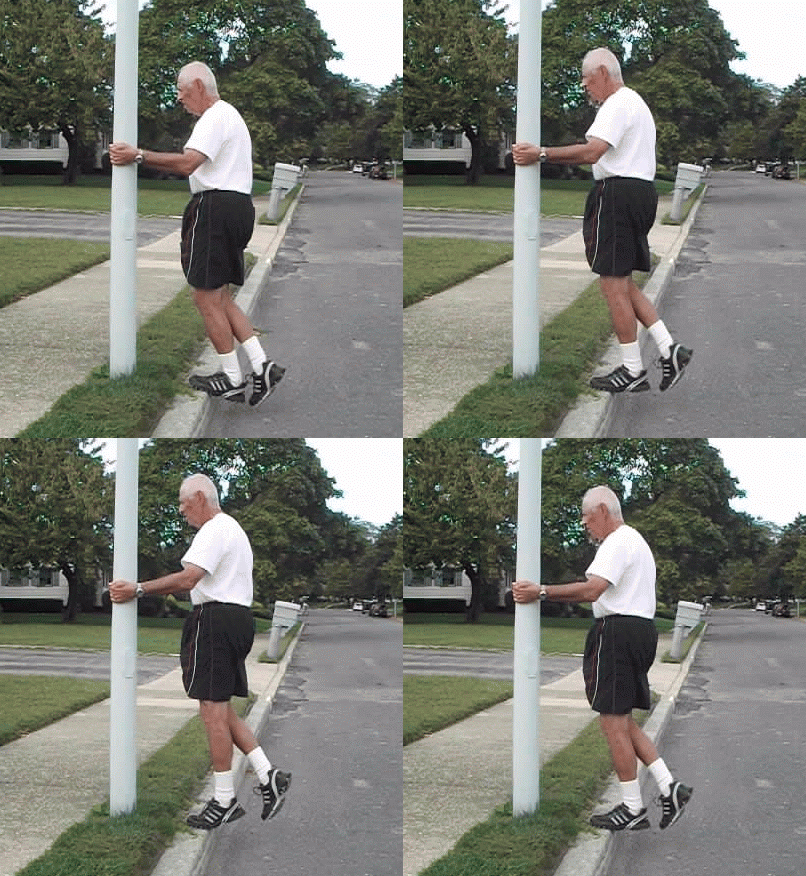 Calf
Calf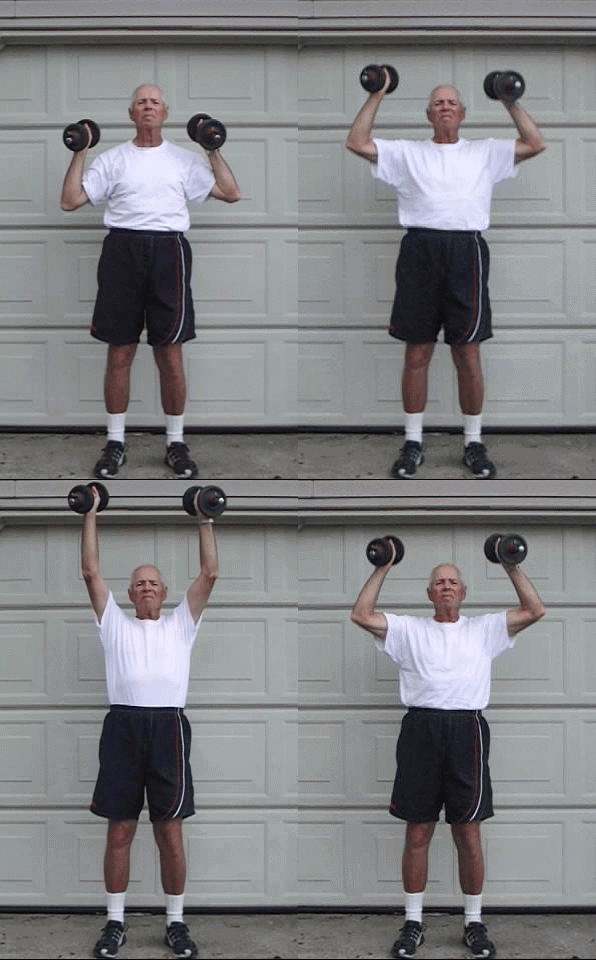 Shoulders
 Forearm:
Wrist Flexors
Forearm:
Wrist Flexors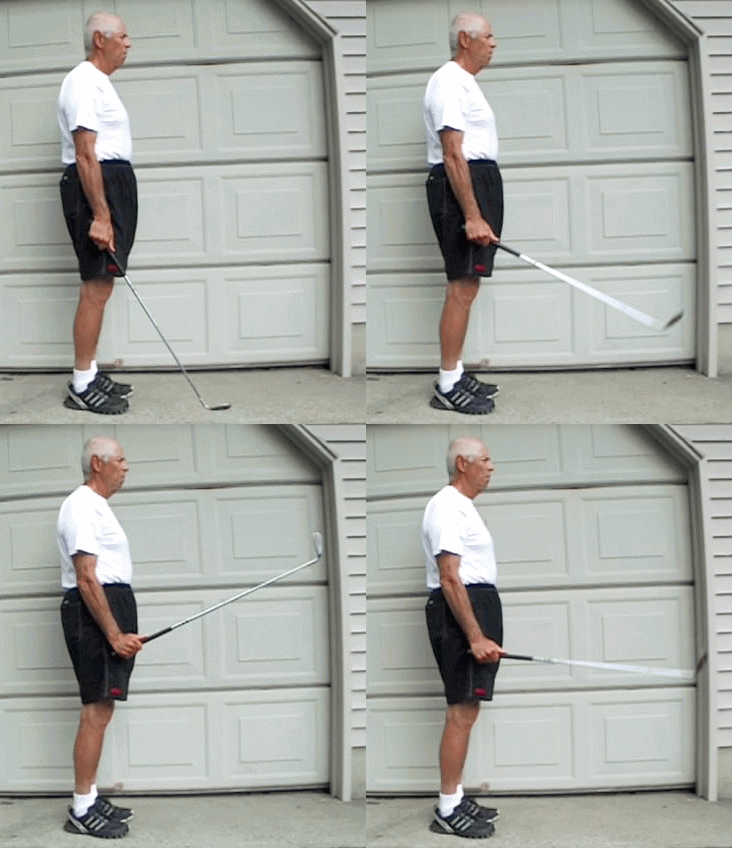 Forearm:
Abduction
Forearm:
Abduction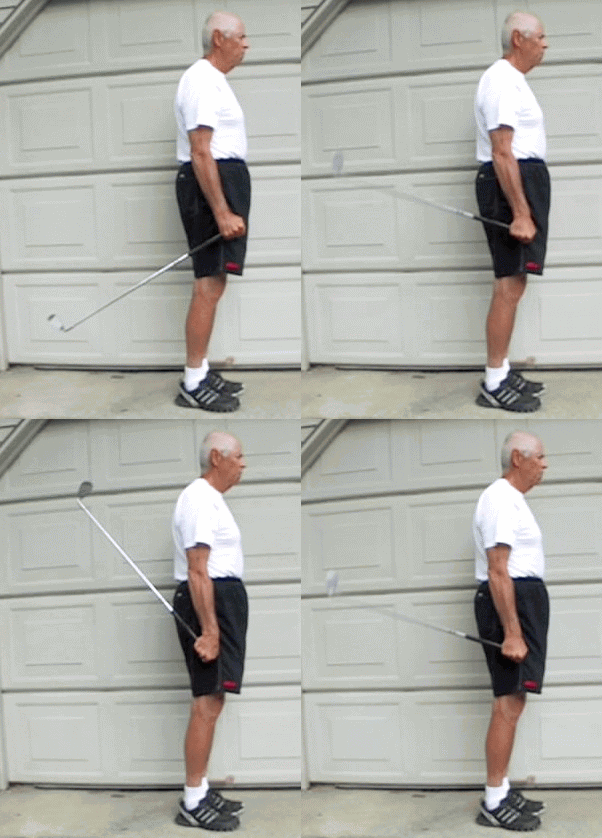 Forearm:
Adduction
Forearm:
AdductionI am 74 years old. Since I was 70, I have done these exercises with 15-pound dumbbells. If you are younger or stronger, feel free to use heavier weights. Heavier dumbbells simply increase the load. When I was younger and used heavier weights, I also used different weights for different exercises. (E.g.- I can apply more force with my wrist flexors than extensors, and the dumbbell weight reflected it.)
Here is my routine. I designed it to flow from one exercise to another to another, with no stopping. I try to keep successive routines away from the same muscle group, and using the same weight or weights.
I have broken it into two "circuits", one using two dumbbells and the other just one. So I can move from one exercise to another almost continuously within a circuit. Both circuits together take about 7 minutes, when you do them properly and don't rush. When I am exercising, I will repeat each circuit two or three times before moving on to the next circuit -- so my training takes either 14 or 21 minutes. (Then I do my stretching, so I'm in exercise mode for longer than that.)
It is a good idea to vary the exercises. At Meryl's suggestion, I alternate my exercise set between "A" days and "B" days, with about half the exercises changing between them. For instance, on an "A" day, I do flat flyes, the regular pecs exercise; on a "B" day, I do inclined flyes for the upper pecs.
| First
Circuit (repeat 2 or 3 times) |
|||
| "A" days |
"B" days |
||
| Squats |
12 reps |
← |
|
| Shoulders |
15 reps |
← |
|
| Biceps |
15 reps |
← |
|
| Pecs |
15 reps |
Upper pecs | 15 reps |
| Second Circuit (repeat 2 or 3 times) | |||
| "A" days | "B" days |
||
| Calf lifts |
20 reps |
← |
|
| Triceps |
15 reps |
← |
|
| Lats |
15 reps |
Upper back |
15 reps |
| Wrist extensors |
15 reps |
Wrist abduction |
15 reps |
| Wrist flexors |
20 reps |
Wrist adduction |
15 reps |
| Now do stretching |
|||
A few additional notes:
- I try to weight train twice a week during the golf season and three times when I'm playing less golf in the winter. I don't always succeed in meeting this schedule, but it isn't too onerous a chore. The equipment is right there in the basement; no dressing up and driving to the gym. And it takes less than a half hour.
- If you have a back problem (or are older and not as strong
as you
used to be), picking up a pair of dumbbells can jeopardize your back.
Perhaps the best way to avoid this is a weight rack so you don't have
to bend over to get the weights. But if you keep them on the floor,
here's a safe way to lift them into position.
- The exercise specialists who helped me vet this article
made a
point to me that strength training should balance
the work on both sides of a joint. Hence we have both flexor and
extensor exercises for the forearm, and both bicep and tricep exercises
for the upper arm.
- Breathing: Yes, you should! For most of the exercises, I
take one
breath per rep. Breathe out during the high-effort part of the rep.
(E.g., for the squats, breathe in when dropping from standing to
squatting, and puff out when rising again.) A few exercises --
forearms,
calf lifts -- go too fast for this; for them, I breathe in one rep and
out
the next.
Last modified 12/6/2015
|
|
|